Crimson | Advisory Board
Healthcare Data Analytics Tool

The Challenge
Advisory Board Company, a healthcare research and consulting firm, manages massive volumes of sensitive data from client healthcare organizations. Their analysts struggled with a critical workflow: understanding the status of data loads from dozens of client organizations, identifying issues before they became problems, and communicating status to both internal teams and external stakeholders.
The existing process relied on spreadsheets and manual tracking—unsustainable given the volume and sensitivity of healthcare data, where a single missing file could break critical analytics tools.
My Role
UX Designer · Led the ideation and conceptualization of Crimson, a data inspection and analysis tool designed for both internal analysts and external client stakeholders.
Design Process
Defining the Problem
Through stakeholder interviews and workflow observation, I identified the core challenge: data status communication was failing on multiple dimensions.
Analysts needed to know:
- Which data files had been uploaded
- Whether uploads completed successfully
- Which files were missing and blocking downstream processes
- What action was required and by whom
External stakeholders (the client organizations providing data) needed visibility into the same information but with different context and permissions.
Information Hierarchy
Working with the client's data team, I mapped every piece of information that needed to be conveyed. The critical insight was that not all information carries equal weight:
Critical: Missing files that block analytics tools from functioning Important: Upload errors requiring attention but not blocking Informational: Status updates that confirm things are working
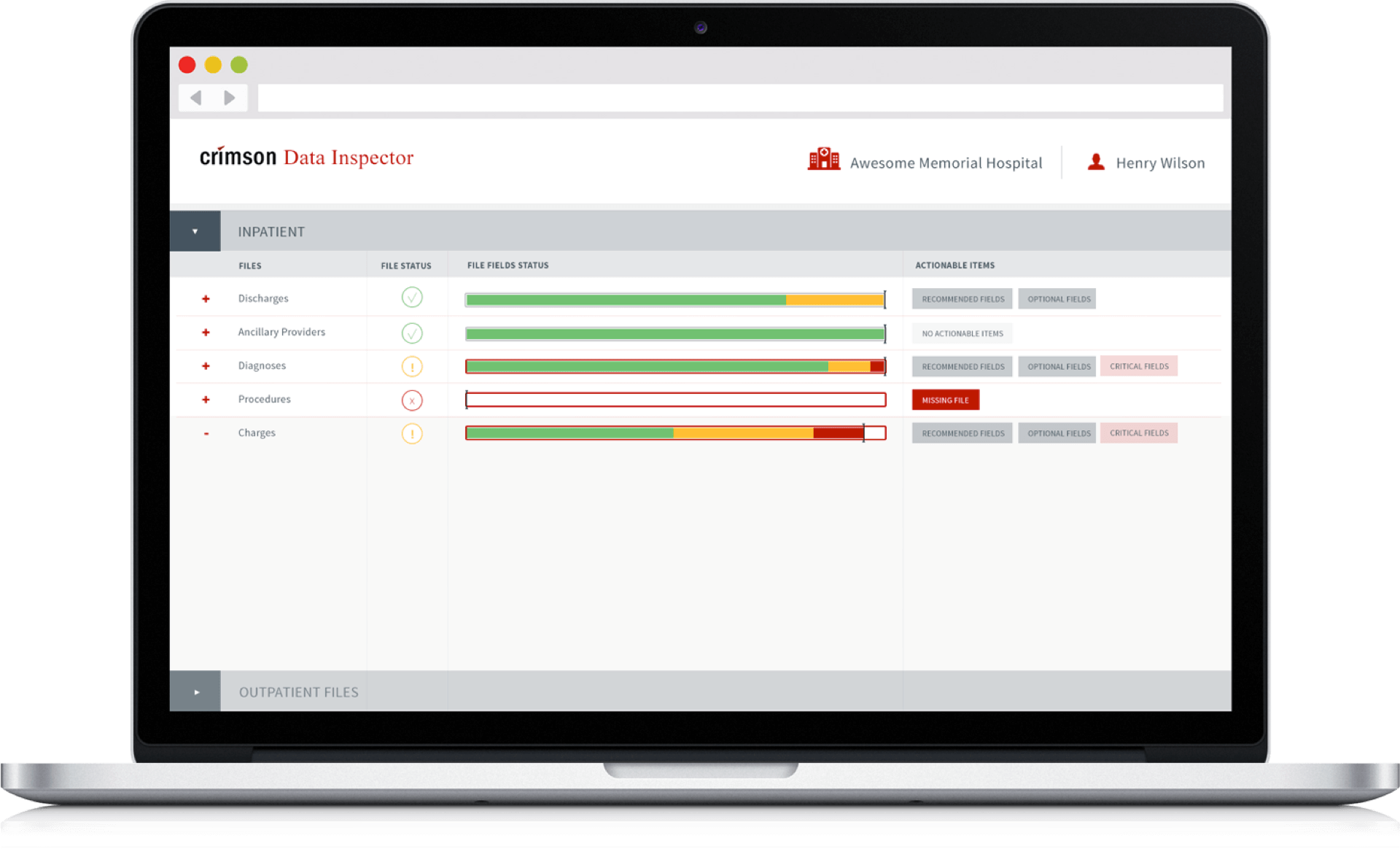
This hierarchy became the foundation for the visual design—color coding, positioning, and information density all derived from these priority levels.
Designing for Dual Audiences
The tool needed to serve both technical internal analysts and non-technical client stakeholders. I designed a progressive disclosure system: the default view provided a glanceable status dashboard anyone could understand, while drill-down views revealed the technical detail analysts needed for troubleshooting.
Every status indicator linked to a specific action item, transforming passive monitoring into active workflow management.
Outcome
Crimson transformed a manual, error-prone process into a streamlined monitoring system. Analysts could identify issues in seconds rather than hours, and client organizations gained unprecedented visibility into their data integration status—building trust and reducing support burden.